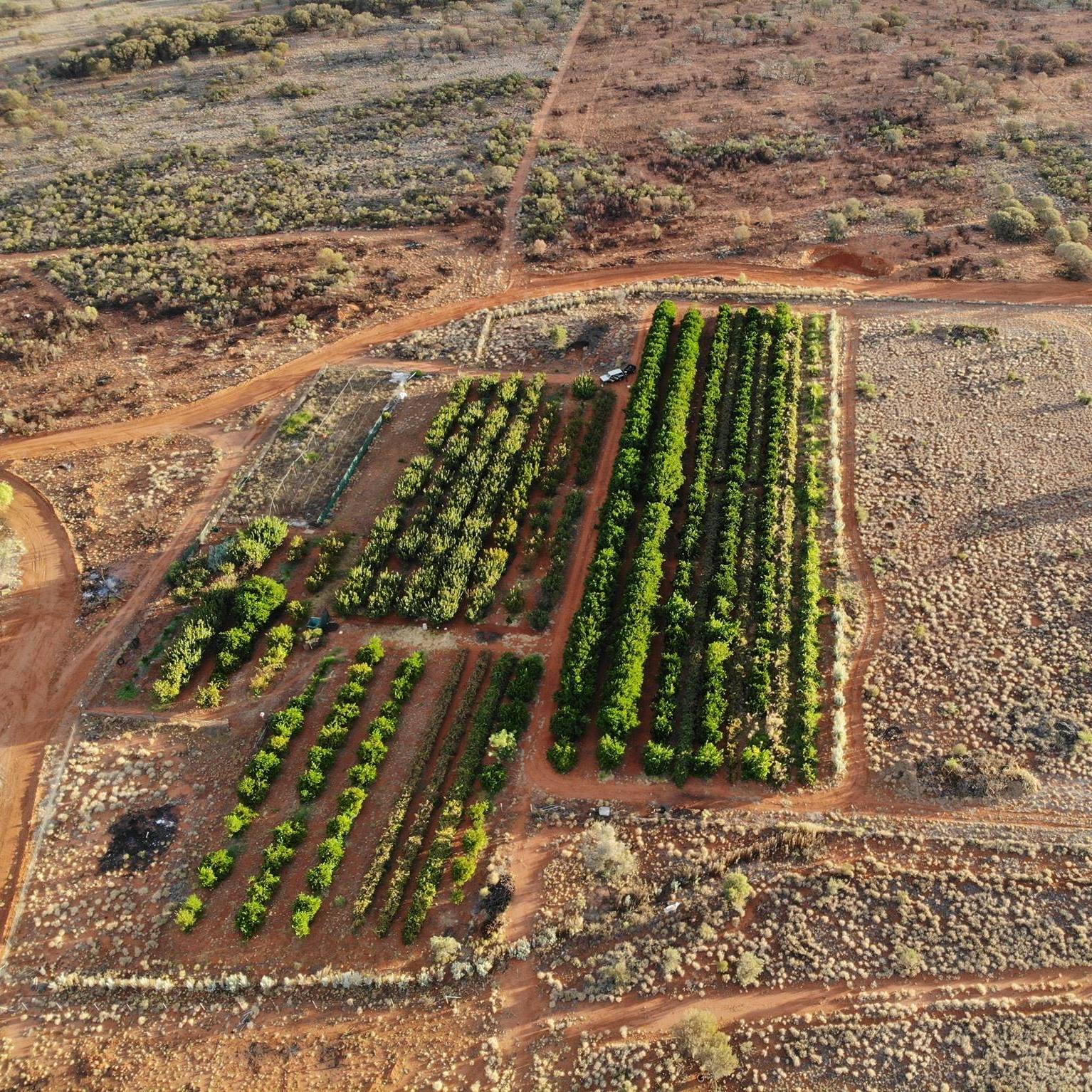
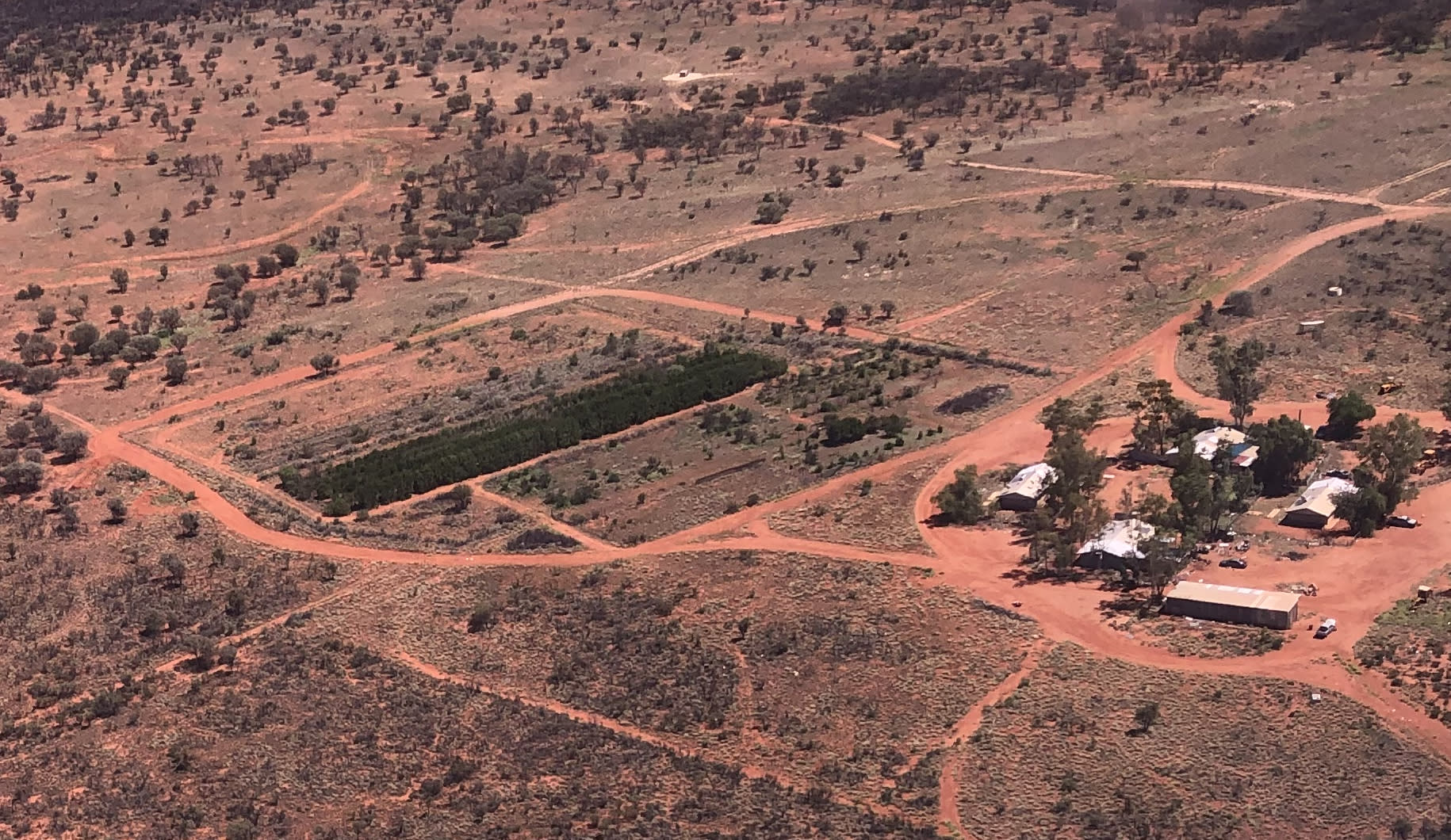
Aerial of an established orchard in remote red-earth Country — productive rows surrounded by sparse arid landscape
Back to Growing Country
Living Infrastructure

Orchards asecological infrastructure.

Orchards are not a side idea for remote food security. They are one of the few systems that can create multi-decade food resilience in communities — if they are designed properly.

Reframing the Word

Beyond rows offruit trees.

Aerial of an established orchard on red-earth Country, set against the wider arid landscape and homestead

The mistake most people make is thinking "orchard" means rows of fruit trees. That is industrial horticulture thinking.

In remote Australia — and especially in arid and semi-arid Indigenous contexts — an orchard should be understood as a layered food and water system woven into community infrastructure, shade, soil repair, nutrition, cultural practice and local enterprise.

Resilience is built through soil biology, water infiltration, shelter and diversity — not inputs.

Integrated systems outperform isolated crops. Living groundcover and microbial health are foundational. Tree systems dramatically improve landscape function over time — surviving drought, fungal pressure, extreme wind, frost and rainfall variability when designed well.

Seven Design Principles

A serious remoteorchard model.

Seven principles drawn from systems thinking — not from industrial agriculture — and tested against the realities of drought, distance and disruption.

01

Shade-first design

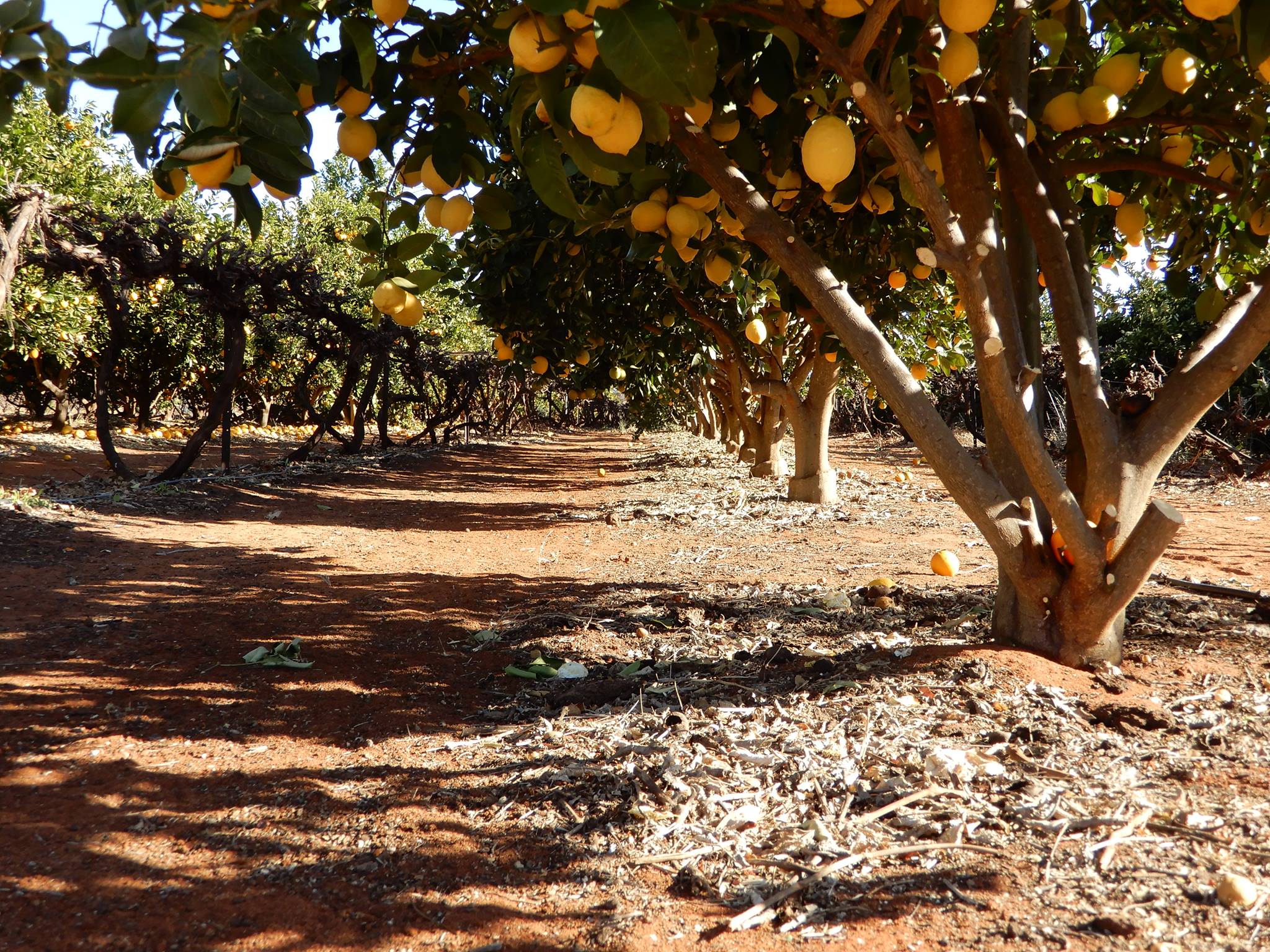
Mature citrus orchard with dappled shade on red-earth Country — canopy, mulch and microclimate at work

In hot remote communities, shade is infrastructure.

You are not just growing food — you are reducing heat load, evapotranspiration, dust, wind and soil death. A badly designed orchard becomes an oven.

Windbreaks. Nurse trees. Multi-layer canopy. Shaded understory production. Water-harvesting contours and swales. Protected microclimates. The orchard begins with the air and the ground long before the fruit.

02

Hardy perennial systems

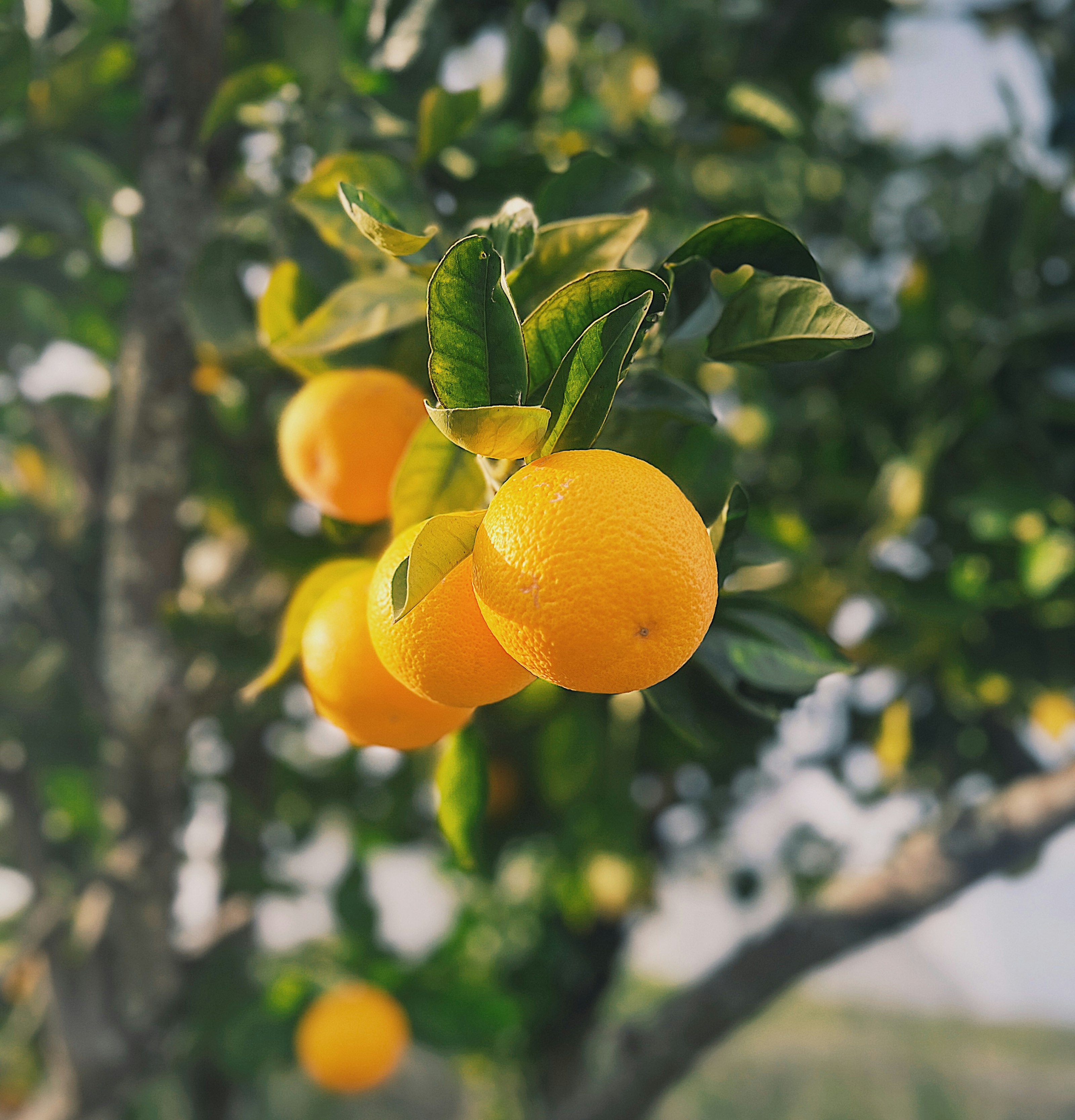
Ripe oranges on the tree in golden light — productive perennial citrus, the resilience proof

Annual vegetables are labour-heavy, water-heavy and management-heavy. Perennials are where remote resilience lives.

A remote orchard should function like a semi-wild productive ecosystem, not a suburban market garden.

Citrus, mulberry, pomegranate, fig, moringa, native plums, bush foods, olives, carob, desert lime — and in suitable zones, date palms, tamarind, banana and cassava. Layered species, not monocultures.

03

Water harvesting over irrigation

Most failed remote food projects depend entirely on imported infrastructure — pumps, drip systems, fuel, replacement parts, technicians. That is fragile.

The goal is to build a sponge, not a hydroponic dependency.

Contour planting. Infiltration basins. Mulch systems. Greywater reuse. Roof water harvesting. Passive hydration. Deep organic matter. Biochar. Dense root systems that hold moisture in the soil itself.

04

Integrate animals

There is no healthy ecosystem without animals. Remote food systems should reflect that.

Chickens, ducks, controlled small-goat systems where appropriate, worm farms and compost systems.

Animals cycle nutrients, reduce weeds, create fertility, increase microbial life and provide protein. That is real food security — not chemicals, not imports.

05

Community-scale enterprise

If an orchard is treated as 'a project', it dies. If it creates capability, it lives.

Jobs. Products. Medicine. Shade. Nursery capability. Seed systems. Training. Tourism. Youth engagement. Cultural authority.

This is the line between charity gardening and ecological infrastructure. The orchards that survive are the ones embedded in real community economy.

06

Native + introduced species together

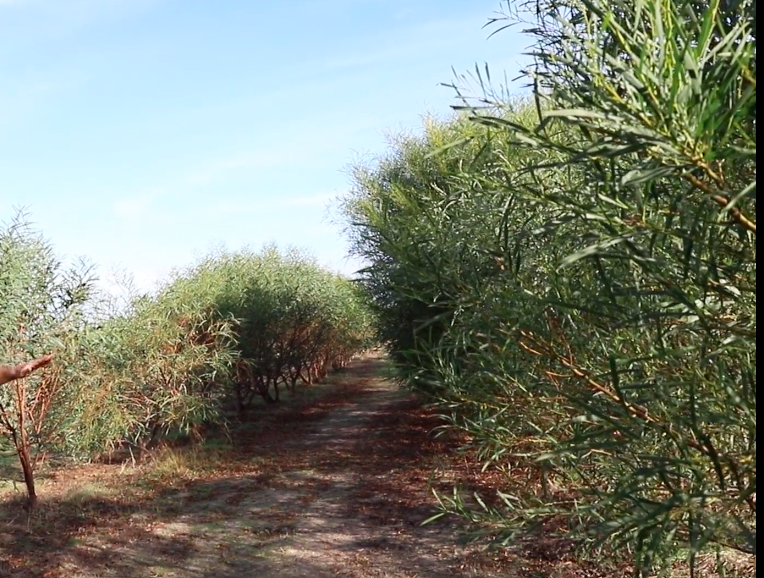
Mature native wattle (acacia) shelter-belt forming a green corridor on Country — native species working as windbreak, nurse plants and pollinator habitat alongside productive food systems

Purely imported food systems disconnect culture. Purely native systems struggle to meet nutrition demand at scale. The honest model is hybrid.

Bush foods. Medicinal plants. Productive introduced species. Agroforestry overstory. Shade species. Pollinator systems.

Integrated together — with local knowledge guiding which species sit where, and why.

07

Orchards as social infrastructure

This is the deeper layer most policy conversations miss.

Shade creates gathering. Gathering creates participation. Participation creates ownership. Ownership creates maintenance.

A productive shaded landscape changes community behaviour — for Elders, young people, women's groups, ranger programs and school engagement. You are not just growing fruit. You are rebuilding relationship with place.

The Honest Pattern

Why so many projectsfall short.

Decades of remote food projects have struggled to deliver lasting outcomes — not because communities lacked will, but because of how the systems themselves were designed.

Where they fall short
  • Externally designed
  • Input dependent
  • Externally maintained
  • Short funded
  • Socially disconnected
  • Disconnected from place
What lasting systems look like
  • Beautiful
  • Culturally owned
  • Low-input
  • Productive
  • Shaded
  • Resilient
  • Economically useful
  • Ecologically regenerative
Living Infrastructure

Healthy soils,healthy communities.

Growing Country recognises that food security begins beneath our feet. Healthy soils contain complex communities of beneficial fungi, microbes, insects and other organisms that help plants access nutrients, resist disease and withstand environmental stress.

By combining regenerative orchard systems, food forests, composting, water harvesting and biological soil management, communities can rebuild living soil systems that support long-term productivity while reducing reliance on external inputs.

Healthy soils are not simply a growing medium.They are living infrastructure that supports food production, biodiversity, climate resilience and community wellbeing.

Healthy ecosystems naturally suppress disease — native soils often contain far greater populations of beneficial fungi than heavily managed agricultural soils, capable of suppressing plant pathogens without external intervention.
A Complete Framework

Not just a garden project.The foundations of a community-scale ecological food system.

01

Water security

Harvesting, infiltration and storage that build a sponge in the landscape.

02

Soil biology

Fungi, microbes and organic matter — the living foundation beneath every productive system.

03

Beneficial insects

Pollinators, predators and decomposers cycling nutrients and balancing pressure.

04

Food forests & perennials

Layered, multi-decade productive systems that work with climate, not against it.

05

Seed & propagation systems

Locally-saved seed, nurseries and bush-food propagation that hold knowledge on Country.

06

Community ownership & enterprise

Long-term capability, cultural authority and economic participation built into the system.

Aerial of established orchard rows in remote red-earth Country
This is not gardening.It is living ecological infrastructure for community resilience, cultural continuity, nutrition and enterprise development.
Growing Country

Growing Country is not simply about growing food. It is about rebuilding local capability, strengthening community resilience, and restoring relationships between people, food and Country.

Building Australia's Indigenous Food Future
Acknowledgement

We acknowledge the Traditional Custodians of the lands and waters on which we work. Sovereignty was never ceded.

© 2026 Growing Country
www.growingcountry.org

Made with Emergent