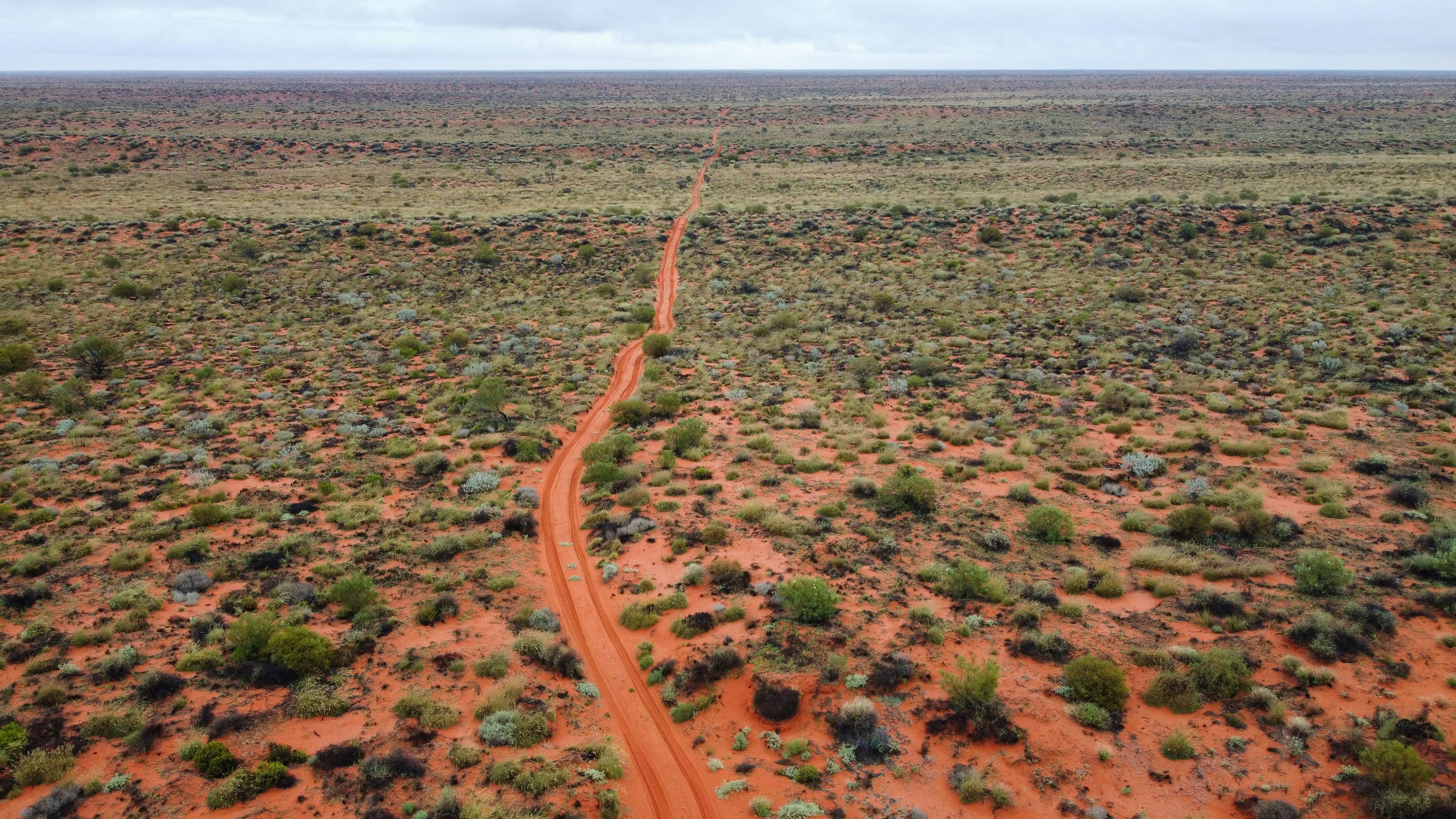
Building Australia'sIndigenous food future.
A national Indigenous food resilience initiative designed to strengthen local food production, improve community resilience and support climate-adapted growing systems across remote Australia.
A national, Indigenous-ledfood future.
Growing Country is a national Indigenous food resilience initiative designed to strengthen local food production, improve community resilience and support climate-adapted food systems across remote Australia.
The initiative responds to increasing concern surrounding remote food insecurity, fragile supply chains, rising freight costs and climate-related disruption affecting Aboriginal and Torres Strait Islander communities.
Growing Country proposes a practical and scalable national pilot focused on rebuilding local food capability through community-led ecological food systems, regenerative orchards, food forests, mobile horticultural support and long-term skills development.
Sitting at the most exposed end ofAustralia's food system.
Australia is one of the world's largest food-producing nations, yet many remote Aboriginal and Torres Strait Islander communities remain highly vulnerable to food insecurity.
Remote communities sit at the most exposed end of Australia's food system, where supply chain disruption, fuel volatility, freight costs and climate impacts are experienced first and hardest.
Climate change, extreme weather events, rising transport costs and ongoing reliance on imported food continue to expose vulnerabilities across remote Australia.
Growing Country has been developed to strengthen local resilience within this increasingly fragile environment by rebuilding the systems that support community-scale food production.
Australia's food system has been optimised for efficiency rather than resilience.
Six connected components,one ecological food system.
Growing Country supports the development of community-scale ecological food systems designed specifically for remote Australian conditions. Rather than focusing solely on annual food production, the initiative combines regenerative orchards, food forests, community growing systems, seed infrastructure and climate-adapted land management to build long-term food resilience.
Regenerative Orchard & Food Forest Systems
Long-term perennial food production systems incorporating fruit trees, bush foods, medicinal plants, pollinator habitat and shade infrastructure — improving nutrition, biodiversity, microclimate regulation and community resilience while creating productive landscapes for future generations.
Community Growing Networks
Locally designed food production areas supporting access to fresh produce while creating opportunities for community participation, intergenerational learning and local leadership.
Mobile Growing Country Units
Mobile horticultural support vehicles delivering technical assistance, training, infrastructure development and on-country mentoring across participating communities — practical support for establishing and maintaining growing systems in remote regions.
Seed Systems & Propagation
Community seed banks, nurseries and propagation systems supporting local food production, climate adaptation and long-term planting programs — helping communities maintain local planting stock while strengthening knowledge transfer.
Soil Health & Biological Systems
Composting, soil biology, beneficial insects, water harvesting and regenerative growing practices that reduce reliance on external inputs while improving productivity and resilience. Healthy soils, functioning ecosystems and biological diversity are recognised as critical foundations of long-term food security.
Training, Employment & Enterprise Development
Practical pathways supporting ranger programs, youth engagement, horticultural skills, community enterprises and Indigenous-led food production initiatives.
What the initiativedelivers.
Eleven measurable outcomes across food security, health, climate resilience, biodiversity, ecosystem restoration, economic participation and community-led development.
- Improved remote food security
- Reduced reliance on fragile supply chains
- Better nutrition and health outcomes
- Climate adaptation and resilience
- Indigenous economic participation
- Community-led development
- Local training and employment pathways
- Cultural knowledge transfer
- Biodiversity enhancement
- Soil and ecosystem restoration
- Increased community capability
Aligned with nationalstrategy and priorities.
The initiative also supports broader national priorities across health, agriculture and regional development by strengthening local food production, improving nutrition outcomes and supporting sustainable economic activity in remote regions.
- 01Closing the Gap priorities
- 02National food security discussions
- 03Climate adaptation and resilience strategies
- 04Regional development frameworks
- 05Indigenous economic participation priorities
- 06Community health and wellbeing initiatives
- 07Environmental restoration and biodiversity objectives
- 08Indigenous-led development approaches
A four-year nationalpilot program.
Growing Country proposes an initial four-year pilot program across approximately twelve remote communities.
The pilot is designed as a practical and scalable model that allows government and partners to test long-term approaches to Indigenous-led food resilience and local production systems.
Food security is not simply a supply chain issue.It is a resilience issue.
Remote communities experience the impacts of freight disruption, rising costs, extreme weather events and climate change earlier and more intensely than most Australians.
Strengthening local food production capacity creates a buffer against these disruptions while building community capability and self-determination.
Growing Country recognises that resilient food systems depend upon healthy soils, reliable water, diverse food production systems and local knowledge.
By investing in regenerative orchards, food forests, seed systems, soil biology and community-led growing initiatives, Australia can support a new generation of climate-resilient food infrastructure across remote regions.
The benefits extend beyond nutrition. These systems support biodiversity, cooling landscapes, cultural knowledge transfer, youth engagement, local employment and stronger connections between people, food and Country.
Growing Country is not simply about growing food.It is about rebuilding local capability, strengthening community resilience and restoring relationships between people, food and Country.
Years of workon Country.
William Martin has spent many years living and working alongside remote Aboriginal communities across Australia.
His work has included community agriculture, native seed systems, ecological restoration, seed saving, ranger support programs and remote food production initiatives.
With support from the National Indigenous Australians Agency and the Indigenous Land and Sea Corporation, William helped establish greenhouses, seed banks and community garden initiatives across remote communities in the Northern Territory.
His work combines practical experience in remote community development, ecological restoration, Indigenous land management and climate resilience.
Growing Country welcomesconversations across sectors.
Start theconversation.
Growing Country — Building Australia's Indigenous Food Future. For partnership discussions, briefings or community conversations, please get in touch directly.